
(618) 444-9976 24/7 emergency sewer service · St. Clair and Madison counties
Sewer Excavation job by Dig N Drain: repair and replacement digs

01 · Sewer Excavation

Sewer excavation that opens only what the repair needs

When a sewer line has to be dug, the camera goes in first and the break is marked on the ground. Then the excavator comes to that spot, the pipe is fixed and camera-checked, and the yard goes back together compacted.

A plumber stops at the foundation. We start there.

Illinois law draws the line. The state plumbing act says plumbing does not include the installation, repair or extension of building sewers, and it ends the building drain five feet outside the foundation wall. Past that point is the building sewer: the pipe under your yard, your driveway and sometimes the street, running out to the city main. That is the pipe we dig to.

In Granite City the median house was built in 1958, and in Belleville in 1960, so the lateral under the lawn may well be the one laid when the house went up. Old clay joints, root-packed hubs and sagging runs are what a backhoe gets called out for.

What we do before we dig

JULIE gets the call first. Illinois requires notice at least two days and no more than ten before digging, and Saturdays, Sundays and holidays do not count toward the two. JULIE marks the gas, electric and phone lines. It does not locate private lines: its own guidance says sewer companies may not locate any part of a lateral service. So our camera and locator mark where your sewer runs and how deep it sits.

Then the permit. Every town handles it differently. Belleville wants a call to its treatment plant the day before work and leaves the repair open for its inspector; Fairview Heights issues street-cut permits only to a prequalified or bonded contractor. Jimmy, one of our customers, put it this way:

They did a sewer job for us at our home and couldn't be happier. Fast, friendly and affordable. They took care of handling all the necessary permits and conversions with the city prior to, during and after repair.

JimmyGoogle review ·

What happens to your yard

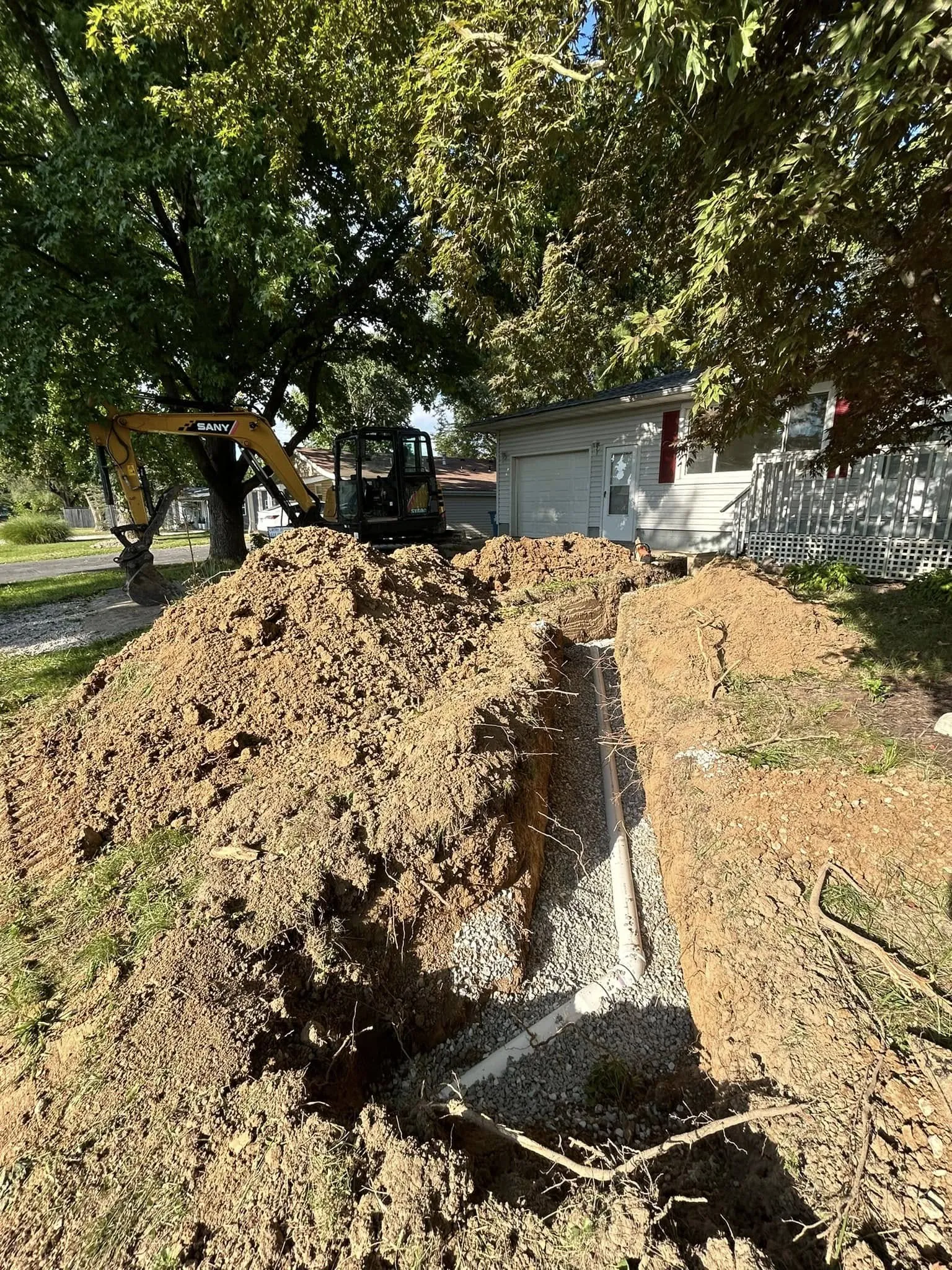
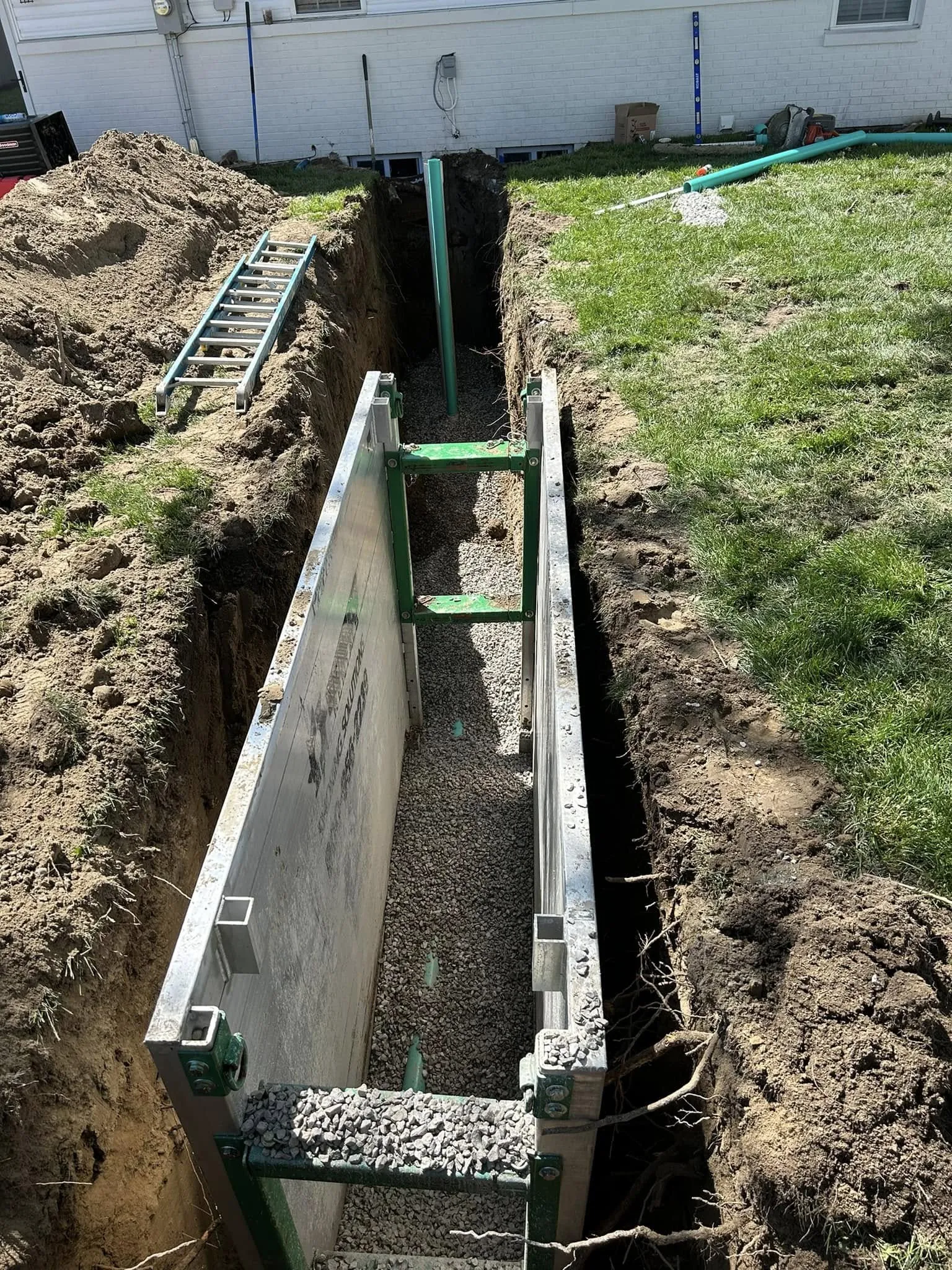
We dig the section the camera found, not the whole run from the house to the street. Deep cuts get trench box shoring. New pipe goes down on gravel bedding at a steady fall, the camera runs through it before anything is buried, and the trench is backfilled and compacted so the lawn does not settle into a ditch next spring.
We don’t just dig… we diagnose, repair, and protect your entire sewer system.

Dig N Drain

When digging is the right answer

  • A collapsed section the jetter cannot get past
  • A belly that holds water, which a liner would keep
  • A joint offset so far that lining is ruled out
  • A new line, a new clean-out or a new tap at the main
  • A broken connection at the city main

Talk to the crew

(618) 444-9976

Answered 24/7. Scope and price before any work starts.

Book Service

How the job goes

What to expect, step by step

  1. 01Camera and locate

    Run the line, find the problem, mark its depth and position on the ground.

  2. 02JULIE and the permit

    Utility locates called in, the town’s permit and inspection lined up.

  3. 03Dig to the problem

    Open the marked section, shore it if it is deep, expose the pipe.

  4. 04Fix, check, backfill

    Repair or replace, camera it, then backfill, compact and clean up.

Our work

Photos from our own jobs

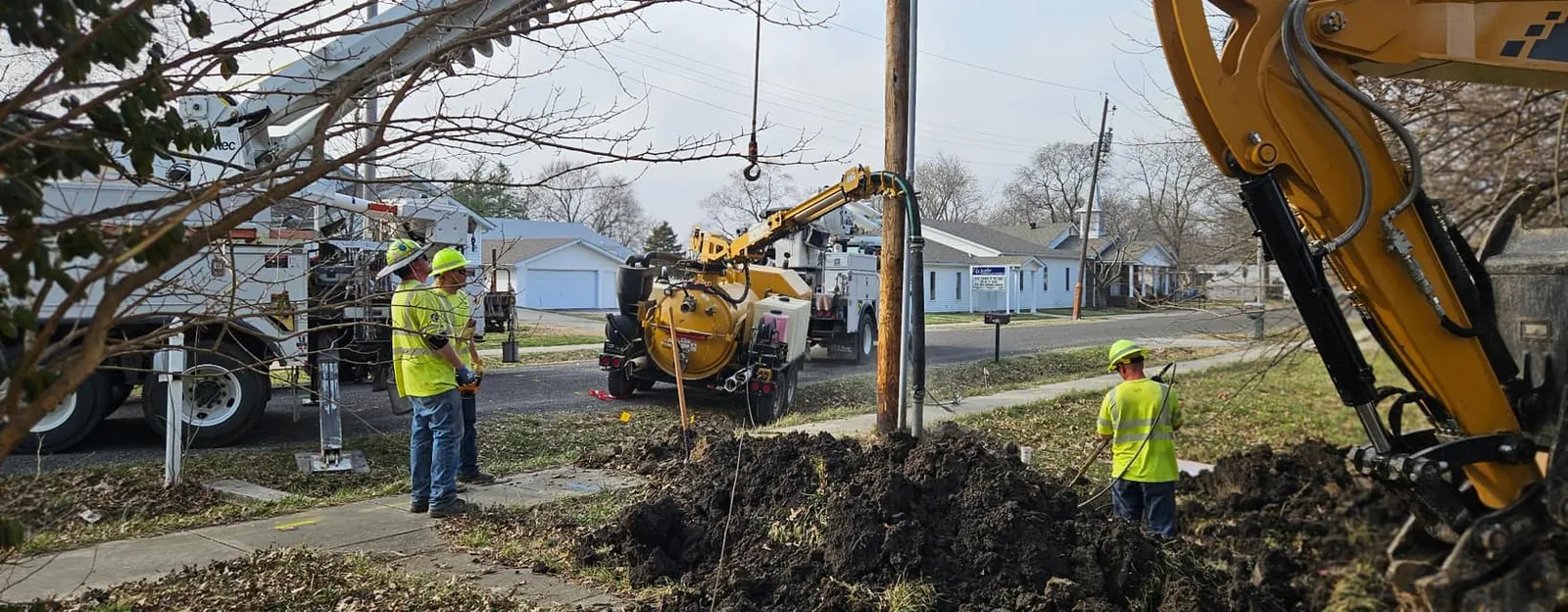
Dig N Drain crew in high-visibility vests with an excavator at a street-side sewer dig
A street-side dig out to the city main.
Deep sewer trench held open with trench box shoring panels
A deep run, shored with a trench box.

Answers

Questions about sewer excavation

Who is responsible for digging up a sewer line, the city or the homeowner?

In most Metro-East towns the homeowner owns the lateral to the main. Granite City says the owner maintains it all the way to the connection with the main, even under the street, and Troy says the same in its FAQ. The city digs only when its own main is broken.

Do I need to call JULIE before digging up a sewer line?

Yes, the excavator does. Illinois law requires notice to JULIE at least two days and no more than ten before digging, not counting weekends and holidays, and the ticket is good for 25 days. JULIE does not mark private sewer lines, so our camera and locator find yours.

Will sewer excavation tear up my whole yard?

Less than you might expect. We dig only the section the camera located instead of the whole run, set the soil to one side, and backfill and compact the hole once the new pipe has been camera-checked. Deep cuts are shored with a trench box, and the site is cleaned up before we leave.

Why does a sewer dig need a camera inspection first?

Because the camera tells us exactly where to dig. Every capture is stamped with the distance from the clean-out, like the joint we filmed 42 feet 11 inches in on May 26, 2025, and a locator marks that spot and its depth on the ground. Digging without it means opening more of the yard.

Do I need a permit to dig up my sewer line in Illinois?

Usually, from your town rather than the state. Belleville wants a call to its treatment plant the day before work and leaves the repair open for inspection; Fairview Heights requires a $2,500 bond for any cut in a street, alley or sidewalk. We find out what your town needs and handle it.

Where your message goes and what the site keeps: our privacy policy.

Backed up right now?

Call the crew with the camera and the excavator.

A person answers (618) 444-9976 day or night. Not an emergency? Send the form and we will set a time to run the camera.

Call Book Service