(618) 444-9976 24/7 emergency sewer service · St. Clair and Madison counties
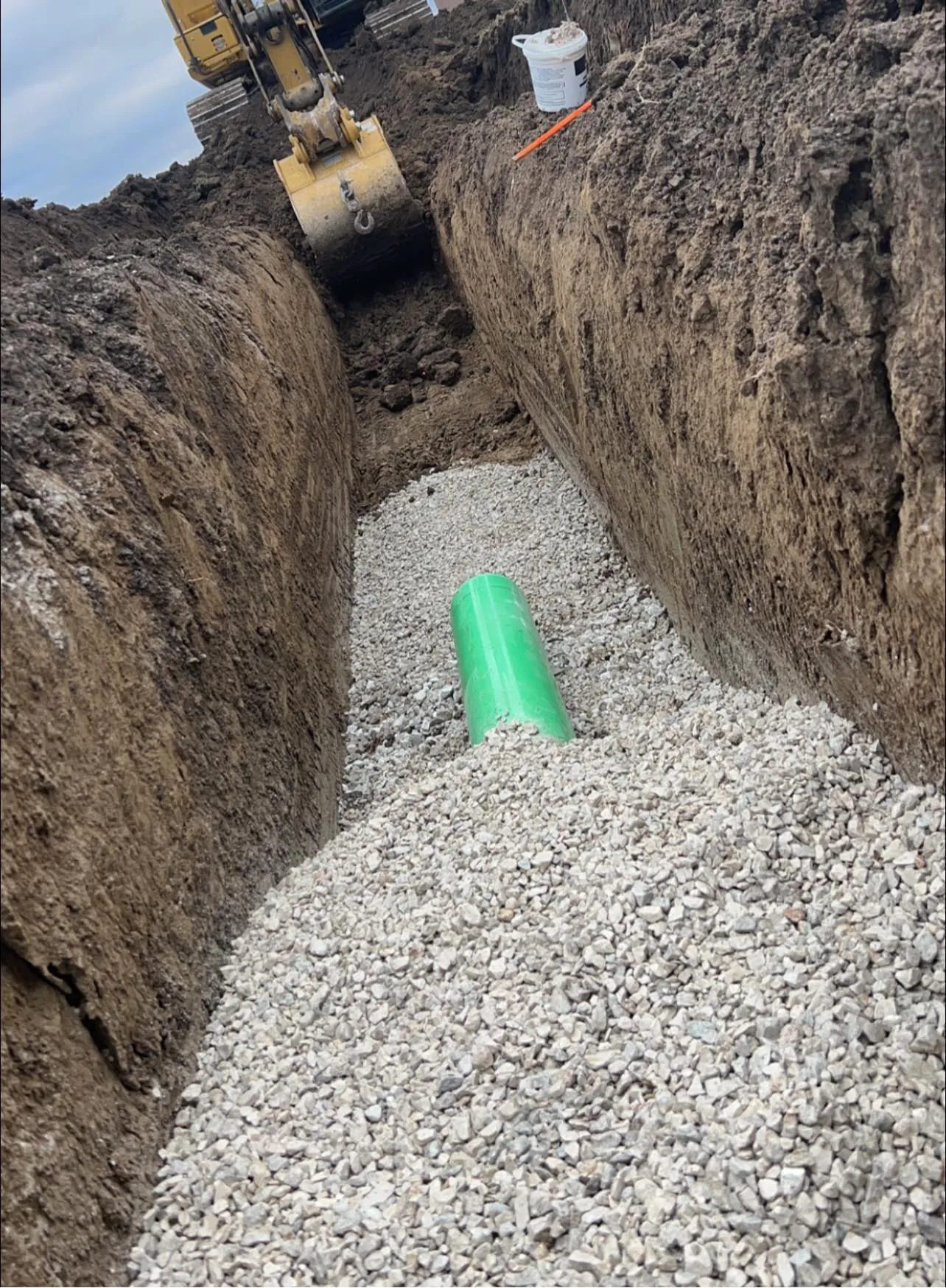
New green PVC sewer pipe laid on gravel bedding at the bottom of a trench

03 · Sewer Line Replacement

A new sewer line, laid right from the house to the main

When the camera shows a line cracked end to end, collapsed, or made of pipe that has run out of life, we replace it. The old pipe comes out, new pipe goes in on gravel at the right fall, and you see it on camera before it is buried.

When the old pipe is worn out

Orangeburg is the pipe to worry about. It was made of wood pulp and pitch, laid in American houses from about 1860 to 1970 and most popular in the 1950s and 60s, and Fairfax County’s engineers note that it can blister, peel in layers and eventually collapse. The Census puts the median house in Granite City at 1958 and in Alton at 1953, right inside that window.

Clay lasts longer but gives out at the joints, where roots get in and the line starts to sag. When the camera shows the same trouble every few feet, replacing the run is cheaper over the next twenty years than paying for spot repairs one at a time.

How the new line goes in

We dig, take out the old pipe, and lay new pipe on a gravel bed with a steady fall toward the main. Illinois sets the minimum grade for drain pipe bigger than 3 inches and smaller than 8 at one-eighth of an inch per foot, and wants a full-size clean-out within five feet of the foundation, so the next camera or jetter has a way in. Then the line is camera-checked, backfilled, compacted, and the dig is cleaned up.

Paul Mueller had his whole line replaced by our crew:

Grateful for their promptness and hard work to replace my whole sewer line.
Paul MuellerGoogle review ·

We’ll leave your property cleaner than we found it.

Dig N Drain

When replacing makes more sense than repairing

  • Backups that come back soon after a cleaning
  • The camera shows breaks or sags along the whole run
  • Orangeburg, or clay with roots at many joints
  • A collapsed line the camera cannot pass
  • A sinkhole or soft ground over the sewer path

Talk to the crew

(618) 444-9976

Answered 24/7. Scope and price before any work starts.

Book Service

How the job goes

What to expect, step by step

  1. 01Camera and scope

    The whole run filmed, the plan and the price set out before work.

  2. 02Locates and permit

    JULIE called, the town’s permit and inspection scheduled.

  3. 03Out with the old

    Excavate the run and remove the failed pipe.

  4. 04Lay, bed and slope

    New pipe on gravel bedding at code grade, clean-outs added.

  5. 05Check and restore

    Camera through the new line, then backfill, compact and clean up.

Our work

Photos from our own jobs

New green PVC sewer pipe laid on gravel bedding at the bottom of a trench
New green PVC laid on gravel bedding.
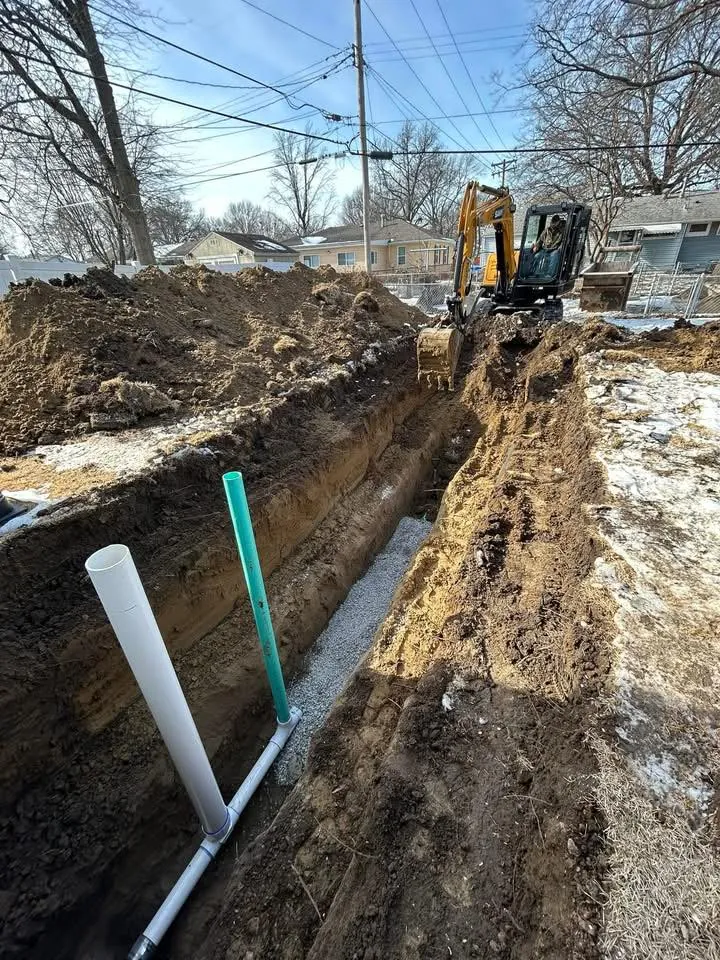
Winter sewer trench with new green and white PVC pipe and an excavator beyond
A winter replacement, new pipe in the trench.
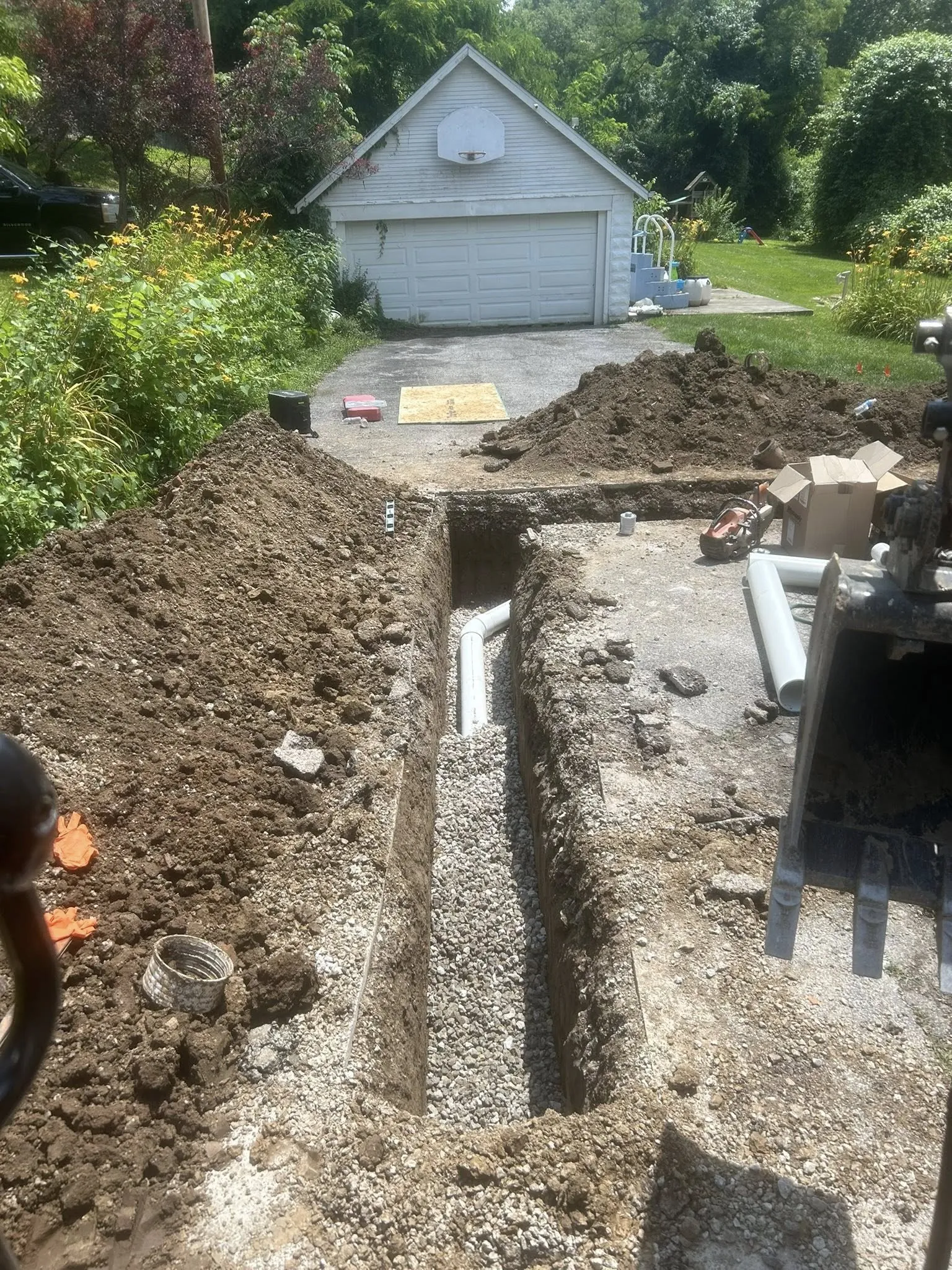
Open sewer trench running from the street toward a garage with new PVC in it
A full run opened toward the garage.

Answers

Questions about sewer line replacement

How much does sewer line replacement cost?

The length of the run, its depth, what is on top of it, and what your town charges for permits and inspection set the price. You get that number, and the scope of work, before we start. Replacing the line once often costs less than paying for repeated spot repairs on failing pipe.

What is Orangeburg pipe?

Orangeburg is sewer pipe made of wood pulp and pitch, used in American homes from about 1860 to 1970 and most popular in the 1950s and 60s. It can blister, peel in layers and collapse. If your house was built in that window and the drains are slowing, a camera run will show whether you have it.

What slope does a new sewer line need in Illinois?

The Illinois Plumbing Code sets a minimum grade of one-eighth of an inch per foot for drain pipe larger than 3 inches and smaller than 8, which covers the usual 4-inch and 6-inch house sewer. We lay the new line on gravel bedding at a steady fall and confirm it with the camera.

Can I replace my own sewer line in Illinois?

Illinois lets an owner-occupant do their own plumbing in a single-family home, but a sewer replacement still means a JULIE ticket, your town’s permit and inspection, an open trench and a tie-in at the main. That is heavy equipment, shoring and code work in one job, which is why most owners hire it out.

Do I need a clean-out on a new sewer line?

Yes. Illinois requires a full-size clean-out within five feet of the building foundation, in line with the building drain and sewer, plus more at set distances and at sharp turns. We install them with every new line, so the next camera or jetter has a way in without pulling a toilet.

Where your message goes and what the site keeps: our privacy policy.

Backed up right now?

Call the crew with the camera and the excavator.

A person answers (618) 444-9976 day or night. Not an emergency? Send the form and we will set a time to run the camera.

Call Book Service